Perhaps no constitution can be perfect. Even the U.S. Constitution has been amended many times since its adoption. However, it has stood the test of time, serving to constrain majoritarian impulses and channel political energy towards long term consensus, and even when courts and politicians worked around it, it stood as a barrier and lodestone for renewing liberty. As that Sharon Statement put it, it meant:
“That the Constitution of the United States is the best arrangement yet devised for empowering government to fulfill its proper role, while restraining it from the concentration and abuse of power;
“That the genius of the Constitution—the division of powers—is summed up in the clause that reserves primacy to the several states, or to the people, in those spheres not specifically delegated to the Federal government”
But these manifest benefits are considered barriers to majoritarian reconfiguration of American society and the fundamental civic principles thereof. There have been many calls to replace the “outdated” Constitution and even proposals for a more majoritarian constitution that empowers government instead of limiting it.
One such proposal is from “Democracy, a Journal of Ideas”, that proposes a new Constitution that gets rid of pesky things like inalienable rights, anti-majoritarian protections, and the sovereignty of states and grants centralized power, near unlimited majority rule, and near dictatorial power during a “state of emergency”.
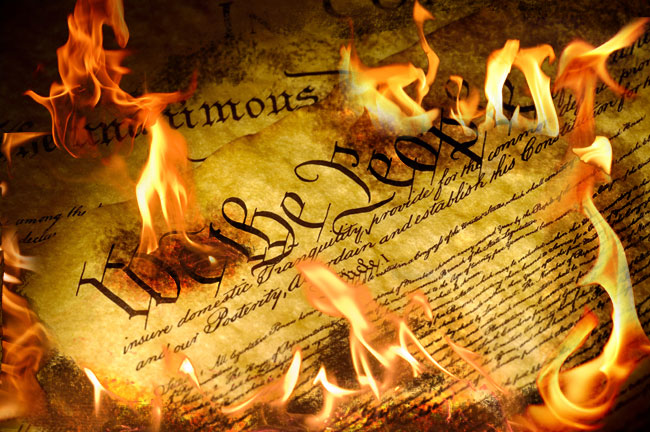
It is not necessary to review all of the sometimes dry wording, and so a simple highlight of its worst elements is all that is necessary to demonstrate the dangers of just such a proposal.
The preamble, fore example includes such gems as declaring the country’s purpose includes “to seek truth and promote justice, past and present”, “to find unity in our diversity”, “promote peace and goodwill among nations and “to foster respect for the earth”. These are all high minded nice sounding things; these are also justifications for South African style “truth and reconciliation” commissions, restorative justice, basing law on identity politics, submission to extra-national and international authorities, and also so-called “nature rights”.
The so-called “Bill of Rights” makes it clear that its purpose isn’t to prevent the government from infringing on inalienable rights, but to empower the government to “secure” and provide rights including government handouts and nebulous “rights” to a spiffy society and world how ever the reformatted Congress decides, and makes it clear that society must be shaped to achieve this in the form of an “advanced democracy” with no definition beyond that and no practicable limit to how that is interpreted.
Most ominously, with the exception of “slavery, torture, and degrading treatment”, all other rights are subject to “reasonable limitations prescribed by such laws that are necessary in a democratic society and compelled by the public interest”. In other words, like many so-called declarations, bill, or charters of rights around the world, the promised rights are only what those in power decide they will be, and allow the governments to limit, balance, or even in effect abolish rights by declaring, without limit, that it is “necessary” and “compelled” by vague and nebulous notions. Rights that can be abridged include right against suspension of Habeas Corpus, bills of attainder, ex post facto laws, due process in law, right against self-incrimination, right to privacy, freedom of religion, press, assembly or petition, and even of citizenship and equality!
Continue reading →